Monday, April 17, 2006

catching up for 2006 so far


The trial training happened back in November (December?) last year. I was very ably assisted by Susan and we managed to get through everything in the two days. Many improvements were identified, as would be expected, and the teachers involved - Ann, Anne, Mary, Robin and Sarah-Jane - contributed some great ideas and the benefit of their experience.

Robin and Susan have both contributed by allowing videos of their teaching to be made, as did Claire. I still need to encourage people a bit more strongly to get out and do some observations.

Also had a thought, that I could send out weekly or fortnightly good teaching encouragers, based on the items on the flow and frequency sheets - eg greeting students; linking material to what was previously learned and/or to students' experiences, etc.

This could link in with the reading I'm doing currently for the MLM - have finally delved into Bloom's Taxonomy (the original, but condensed) and discovered Cyrs, who approaches the Taxonomy concepts from a very practical perspective.

Getting back to the update - I visited Mount Isa early this year and ran a workshop on the micro-skills. It was really inspiring to be there and to hear about the energetic and innovative ways a lot of teachers out there are meeting their challenges. There is a great partnership between the TAFE and the mines, to fast-track 70 apprentices through two years of training to get them into the mines in a productive capacity quicker. I'm hoping to get back out there to do some observations.

The Brisbane training didn't go ahead in March due to Cyclone Larry interfering with travel plans. It has been rescheduled for May 22-23.

In the meantime John has helped out by assigning two of his Diploma of IT students, Natasha and Shirley, to do an assessable project developing a database to capture quantitative data from observations. They have quite quickly grasped the basic concepts and principles of TROPIC, and this week will show me what shape the database is taking.

For my final project in the MLM (Master of Learning Management, Central QLD Uni), I am doing an evaluation of the implementation of the TROPIC program across the different institutes. I'm using Kirkpatrick's 4-level evaluation as a model, and for my methodology will be surveying all the participants in the training followed by 3 case studies of teachers involved in the implementation.

That's about it. I have done 3 observations so far this year, each one together with a video recording of the lesson.

Oh, one other thing - Mary and I are going to attend a symposium on workplace learning in Brisbane early in May. We will look from there at implementing some teacher development around workplace learning (with help from Trish and support from Professional Practices Unit, and maybe Reframing the Future funding). It would be good to link this in with TROPIC and see how we can apply and/or adapt the observation tools and processes.

Main thing to focus on now - getting some more activity happening with those who did the training.

Wednesday, November 02, 2005

early November update


The biggest news is we produced a DVD to demonstrate the teaching strategies that appear on the frequency observation sheet. Lots of people contributed to this - above all Jacquie as director/producer, Ian as cameraman, teachers Bruce, Douglas, Helen, John, Susan, Tim and many students.

I have written a training outline and will spend some time next week with Susan planning the program.

Together with Peter from PPU I met with Lisa from SQIT and Jill from WBIT and we are all set to go in March with the training to take place in Brisbane. I will follow up with visits to each institute for co-observations and whatever else is needed.

We are going to run a trial here at TNQT, looks like November 22 and 24 - have had several expressions of interest (after getting the go-ahead from Education & Training) and the majority favour the November dates.

Jo has asked me to run some sessions in Mt Isa as well, last week of January. So it's all go!

Friday, September 16, 2005

september update

Have been caught up with ETRF and schools stuff for a few months now but there are still things happening with TROPIC. The most exciting news is the video - in edit stage already. I'm meeting Jacquie and Ian in the edit suite in 5 minutes so this is a bit rushed but was on my list of things to do today...

I spent most of yesterday planning the training program - I have a good outline prepared, which is based on Bernice McCarthy's 4MAT system... still needs some details nutted out but the big picture is there. The video is going to be very useful.

Helen has put together some web materials which look great, and she is going to put them into Janison. Not sure how or if I can fit them into the training program though - either as a back-up, or as an alternative to F2F delivery of training.

The other thing was a presentation at the staff learning and development day which seemed to generate a lot of interest.

Out of time already.

Tuesday, June 21, 2005

and...

The other thing last month, was a discussion around behaviour issues of 15-17 year-olds. Jennifer Bailey from TAFE Q ETRF network requested information and I sent round an email to staff here. Got a few responses. Issues around general lack of maturity and lack of motivation (especially flexible delivery programs). Very few instances of violence or severe disruptive behaviour.

June update

Forgot to mention last update, Susan and I also ran a micro-skills workshop in Mareeba on May 19. We then ran another one May 31 in Atherton, and in Cairns on June 3.

Small attendance, but worthwhile in that we honed our skills and knowledge in presenting, and had the opportunity to talk with teachers and get their views. We had only one participant - Denise - in Cairns but the quality of her input made up for the size of the audience. A key thing I took away from that was an emphasis on creating the environment. To me this is the unspoken side of establishing expectations. It's not just about being clear on rules, it's about establishing a welcoming environment where everyone is encouraged to participate.

Colleen and John and I met May 24 and talked about the training program. We agreed that we need a video to demonstrate the micro-skills and strategies. The exciting news is that Jacquie is going to produce the video. Next step is to organise a brainstorming session with the TROPIC team and other teachers who can contribute ideas for the script. This is going to be an exciting process and will produce a great product.

Tuesday, May 24, 2005

May update

Yes it's been far too long. A few things have been happening:

April 4 attended Innovation Masterclass in Brisbane (PPU)
5 attended Andrew Fuller talk
6 profiled Helen in Mossman
11 met with Peter Skippington
12 lunch meeting with Peter, team members, Donna-Maree, Dale and Sue
13 profiled Alan in Mossman
19 profiled Helen again

Some useful ideas in the Andrew Fuller talk, especially about creating a conducive environment, and understanding and dealing with particular types of difficult students. Fortunately somebody sent round some notes which I have a copy of.

The Mossman profiles were tremendously useful - lots of examples of good teaching practice, and led to inclusion of a new category in the frequency sheet: using analogies. Helen has some wonderful techniques for teaching new computer users, and for IT teaching generally.

The meetings with Peter Skippington were very productive. PPU is funding us again next year, over $25000 this time. We need to develop our training program, trial it in-house and deliver it to 2 TAFE institutes.

Dale's attendance at the meeting was a surprise but was very fortunate as it certainly increased his awareness of and interest in TROPIC.

Not quite so much activity in May as I have been busy with diploma of e-learning, digital images course and ETRF.

May 12 met with Alan and talked about project-centred learning.

13 met Todd and Adam from Choice - led to thinking about a potential project working with disengaged youth. This is on the basis of leading by example - I try it out, learn from mistakes and share what I learn with others. Needs further thinking, and discussion with D-M before I proceed.

17 attended forum with Victor Callan about staff capability - TROPIC program was mentioned.
Sent draft proposal to PPU - accepted.

18 visited Innisfail and heard there are many behaviour issues with TAFE-Sec students. Caught up with Peter and talked about delivering micro-skills workshop, early next term. Peter says he has done some profiles.

20 phone conversation with Douglas - has been talking with Ros about teaching strategies and preparation for Your Future Your Choice course. Still aiming for a date with RATEP.

23 reply from Bobby Harreveld to my email suggesting my MLM "product" about TROPIC be in the form of a digital story - keen on the idea.

Having a meeting this afternoon, expecting Colleen and John and maybe Douglas. Hoping to update everyone and get updates from everyone, and to discuss possibilities for the training program.

Thursday, March 31, 2005

March update

I did profile Colleen earlier this month and without wanting to breach confidentiality will say - she did all the right things. It was refreshing to observe such clear-cut examples of good teaching practice. One thing it demonstrated is that these strategies are observable.

The following week I met with Susan in Atherton and we talked through a number of issues. One outcome was that we decided on some more changes to the sheets, to incorporate some of the practices I observed.

For example, the flow sheet now includes a space to note or list the variety of methods and materials used. There is now a "teaching strategies" section in the frequency sheet, which includes a couple of the things formerly in the "positive supportive strategies" section like "link/reference to industry", as well as new ones like "giving examples" and "summarising".

To really tidy this up, I need to go back to the descriptors document and update that.

The challenging thing now is to keep some momentum going with the team. I don't think anybody apart from Susan has done any profiles lately (or at all this year). I need to confirm with Susan when we are going to run microskills workshops with H&CC and up in the Tablelands. And perhaps see if Colleen wants to co-facilitate one with T&H. Douglas seems too snowed under at the moment to think about doing the planned RATEP one. I need to catch up with John about the database and I haven't heard from Peter for some time.

Can't do much before next week though. But I know I will need to do a lot of individual following up.

Thursday, February 24, 2005

TROPIC training

Had a talk with Robin this morning about her plans of offering mentoring for new teachers around health and maintaining balance. This is something she's proposing as part of her LVT duties. She was thinking of proposing TROPIC training as part of her PD.

I feel that because we are moving in quite a different direction from Mark, that we're better off training our own people rather than sending any more to him. There's so much translation involved, and the current team has already invested a lot of energy in that. On the other hand I feel we're still a pretty long way off from having our own training program.

I guess another point is, we're not exactly inundated with requests for profiling now. Getting more people involved helps to spread the culture - but I think we're better off doing that by running more micro-skills sessions.

On that topic, Robin pointed out that she and Colleen have a lot to offer in terms of innovative facilitation techniques. I'm going to profile Colleen next week so will probably pick up on some of that - which could be incorporated into the revised micro-skills I'm thinking of.

We really need to get all of that basic stuff right before we can think about a fully-fledged training course.

We also need to think about some form of quality control. I don't think we need a two week course, but we don't want to be slap-dash about it either. Things for the team to consider.

Wednesday, February 23, 2005

update for February

At our meeting last Friday we talked about the direction of TROPIC and agreed the focus has to shift from behaviour management to teaching and learning strategies. We had some discussion about including teaching, learning and assessment strategies to meet audit requirements - basically looking at the big picture and assisting teachers with that. However, while that's very much needed it's too broad as a process for TROPIC which we agreed has to keep to the principle of a "snapshot in time" where observation and reflection take place.

Behaviour management still needs to be part of the picture as this is definitely an issue in many areas. We talked about David Merrill's model of "first principles of instruction" where teaching centres around a problem for learners to solve, progressing through the stages of activation, demonstration, application and integration. (Merrill's paper is at http://www.id2.usu.edu/Papers/5FirstPrinciples.PDF)

From our discussion we made some changes to the flow sheet. There will almost certainly be more changes to come, and to the frequency sheet as well.

An issue that came up in the meeting that we didn't have time to address, is a process for discipline procedures - that is a clear set of steps to follow. In particular we need to know what the duty of care is for under 18 year olds. I am looking into that to report back to the group. What I would like ideally is a concise one-page hand-out for teachers. I'm wading through the Student Information and Requirements document (41 pages) and will chase up anything I can't find in there.

At the next meeting I'd like to look at the micro-skills booklet. I've been thinking about whether we could incorporate some of the things that came out of the Larry Smith workshops a couple of years ago.

Finally, I did a profile on Monday of a very small group. Apparently my presence made the students quieter than usual... It was a diploma level class and I picked up a couple of things that might be worth adding to the frequency sheet - using examples, and keeping the discussion on track.

Monday, February 14, 2005

first workshop

Douglas and I ran a session with the Access Unit on Friday, giving an overview of the micro-skills and the TROPIC program. I felt it went pretty well.

We started by getting each person present (it was a small group) to give a brief description of their worst classroom management experience. Then we went through the micro-skills (took a bit longer than planned). Brief morning tea break, then a look at how the process works and what is on the sheets. For a wrap-up we asked for feedback on the program itself and on the presentation.

The main points were, that it's good to shift to more of a teaching/learning focus rather than the behaviour management per se; and that people who begin teaching with a Cert IV need a lot more support in how to teach.

We may get a chance to run a session with RATEP in coming weeks. I can't think of anything specific I would change in the presentation format - but personally I like to keep it open-ended and more of a conversation. Although we do need to tighten up the time a bit.

Tuesday, February 08, 2005

2005 first update

First of all, came across this article in OLDaily: http://www.newhorizons.org/neuro/caine.htm - about learning and the brain. This is the kind of stuff I think we should be focusing on - how learning occurs.

I'm working on an application for a New Practices project - applying TROPIC principles to e-learning. The idea is to form a community of practice to try out a tool and method based on TROPIC, to online teaching; then as a group to discuss and analyse and explore over a period of time, gradually refining and improving the tool and method. The outcome would be a case study and a transferrable tool and method for structured peer observation and mentoring in e-learning.

Met with John last week and discussed a database for collating TROPIC information.

Douglas and I have planned a workshop on micro-skills and TROPIC, to be held with the Access Unit this Friday.

Hopefully I will be meeting with Colleen tomorrow to talk about how the proposed New Practices project might link with her TAA project - looking especially at the e-learning competencies in the Cert IV and Diploma.

And, there's a meeting with the team planned for Friday week. Peter from PPU might be visiting early next month - and my role has been formalised to an extent, meaning real management support for TROPIC and for educational quality and innovation. Good news.

Thursday, December 02, 2004

input from staff

I just sent a message to all staff asking for their examples or suggestions about establishing expectations. Hope I get a good response.

Talked to Colleen this morning too, and saw Douglas and John yesterday. So I feel a lot more positive about how things are going, even if it is slowly.

John and I are going to meet next week to look at how to improve the collation process. Susan and I are having lunch on Tuesday, and she has plans in place for working with her team and faculty. Douglas is also planning to present information about TROPIC to his team next week and to run a microskills workshop with RATEP early next year.

Colleen suggested to me today that we make sure we have a high profile at the staff PD day next September.

Wednesday, December 01, 2004


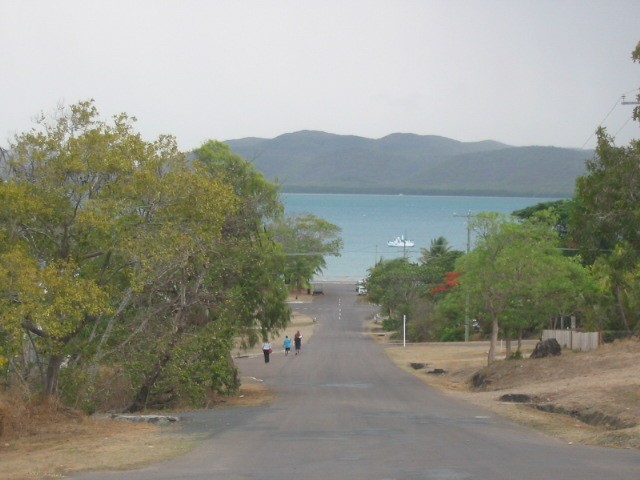
TI street Posted by Hello

Tuesday, November 30, 2004


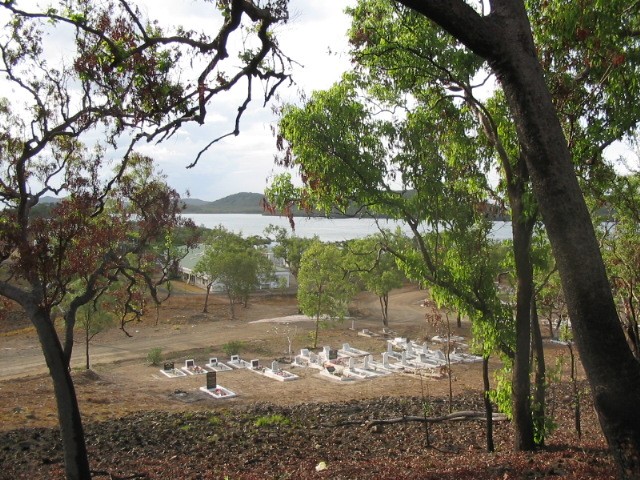
Thursday Island, above the cemetery Posted by Hello

thursday island

Last week I was in beautiful Thursday Island. I didn't do any observations but I did spend time in the classroom working with the students - Josephine was there teaching computers to a group of Access students. I enjoyed that very much - enjoyed meeting the students and having a look around the island.

I managed to talk to Regina (admin officer) about TROPIC, so she is now aware of it. She seemed very interested. Intriguing things that came up - when I mentioned the behaviour management aspect, Regina wanted to know if this could be applied to staff. The other thing I noted was that behaviour issues are much more of a problem outside the classroom - ie problems that arise during the residentials, especially the longer ones.


Monday, November 22, 2004

teacher reflection

I just had a reflection session with one of the teachers and asked him whether he felt the process was useful and if there were any particular aspects of teaching he felt it would be useful to get feedback on. His concern was mainly with "getting in a rut" and he believes the process helps to keep teachers on their toes. He also said he'd be willing for me to come and observe a theory lesson early next year.

Thursday, November 18, 2004

implementing TROPIC

Some ideas that came out of my discussion with Colleen yesterday that I want to capture before I forget:
  • the micro-skills booklet - this should contain examples from TAFE teaching. One way to approach this is to write up a few we know of (or make them up) and send to teachers, inviting their comments and their own examples. As Colleen suggested, each team member could assist by talking to colleagues, gathering examples and writing them up or telling me about them
  • of course I'm also hoping to gather examples when we run workshops
  • this is about a general principle or value I hold about TROPIC - that it's as much about gathering and disseminating examples of good practice, as it is about giving feedback. As I often say, everybody has something to offer and everybody has something to learn
  • another thing I thought of, is to include in every reflection session a brief discussion of how useful the process is for the teacher - I mean I think we should ask them at the conclusion of the session, whether they found the feedback useful and whether there are other aspects of their teaching that they would like feedback on or feel that their colleagues could benefit from. A way of finding out what the issues are that really concern teachers. Just informally - but it will help guide us to keep tailoring the program to suit needs.

Friday, November 05, 2004

more on focus groups

Perhaps we could plan and run a series of focus groups/workshops on different topics and different aspects of teaching. Micro-skills, learning styles... or we run workshops in the skills areas and focus groups to find out what concerns teachers have - how to engage students, how to build positive relationships with students, how to encourage students to collaborate, etc... The two could feed into each other, ie we could run workshops addressing the areas of concern identified in the focus groups. We can also pool expertise from both activities, I mean draw out and disseminate the knowledge and experience teachers have. This process would also be a way of raising awareness and of being very inclusive in how we develop our program.

Thursday, November 04, 2004

focus group idea

A thought occurred to me that we should run some focus groups with teachers to find out what sort of feedback about their teaching would be most useful to them.

Monday, November 01, 2004

some learnings

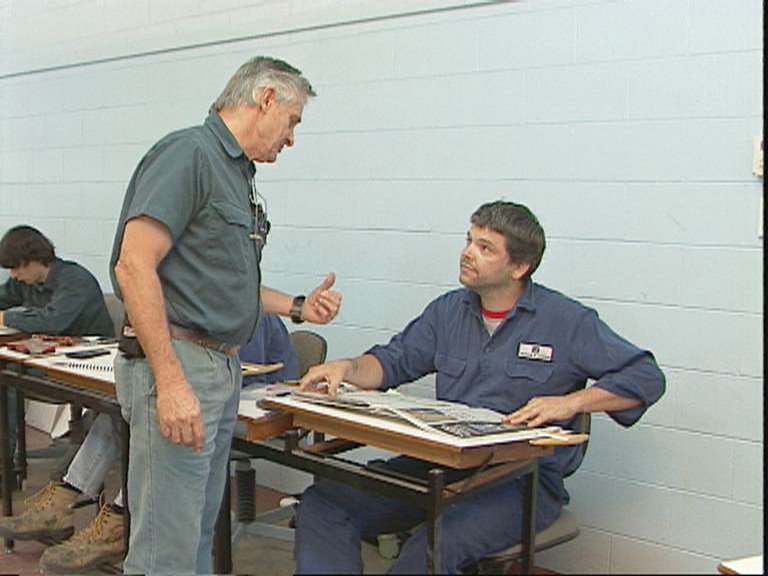
I got some key learnings out of Thursday's experience of being profiled teaching Douglas's class.

1. It is imperative that we treat teachers with the utmost respect.

Leave the sheets in a sealed envelope immediately after the profile session, straight after photocopying them. Be sure that you pre-arrange a reflection session, preferably the day following the profile.

It is so important that we don't take the attitude, "I am an expert on teaching (or behaviour management or whatever) and I am watching you and will let you know how you did".

We are providing a service. Teachers are doing us a favour by allowing us into their classrooms. This is a sacred trust. Honour it and honour them. If we don't get that right, there is no point in doing this at all - no matter how "correct" we get the details. The feedback we give teachers needs to be respectful, honest and meaningful in their terms.

This comes back to Susan's point about having a vision. That's my vision - that we respect and support teachers. We need to convey that clearly and right from the start - or they are not going to want to know about it.

It's also of great importance that our workloads accommodate our ability to do this. If we don't have the time and the cognitive space to do it right, we can't do it. This will definitely require planning and may require negotiation about workloads.

2. It's easy to get videos made.

It wasn't perfect. I am sure to cringe when I see it. I didn't fully explain to Ian the purpose of the video and so he may have got too crafty with his shooting.

That doesn't matter. The important thing is, the video got made. We've made a start. The purpose was not to capture an exemplary lesson - it was to start to build a bank of resources that can be used for training - ie observation practice. I've done it - you can do it too. And we can only get better.

3. Another point that Susan made in conversation with me: in adult learning situations, it is not only the teacher who is responsible for behaviour management. I agree with Susan, and this is something we need to think about more.

A mature Torres Strait Islander man directed another student at one stage in the lesson to do something and this was marked as an example of 'disruptive behaviour' on the sheet. In my experience, and in my opinion, that man has more authority over other (younger) Torres Strait Islander students in the classroom or elsewhere, than I have. This (meaning the broader issue, not so much the specific example) needs a lot of further discussion.

4. The above point relates to a broader issue again. I'm much more interested in being "a guide on the side" than "a sage on the stage". Yes we do need to develop skills for sustaining positive and harmonious relations in learning situations - but I don't see the teacher's role as 'maintaining discipline'. Again, a topic for more discussion.